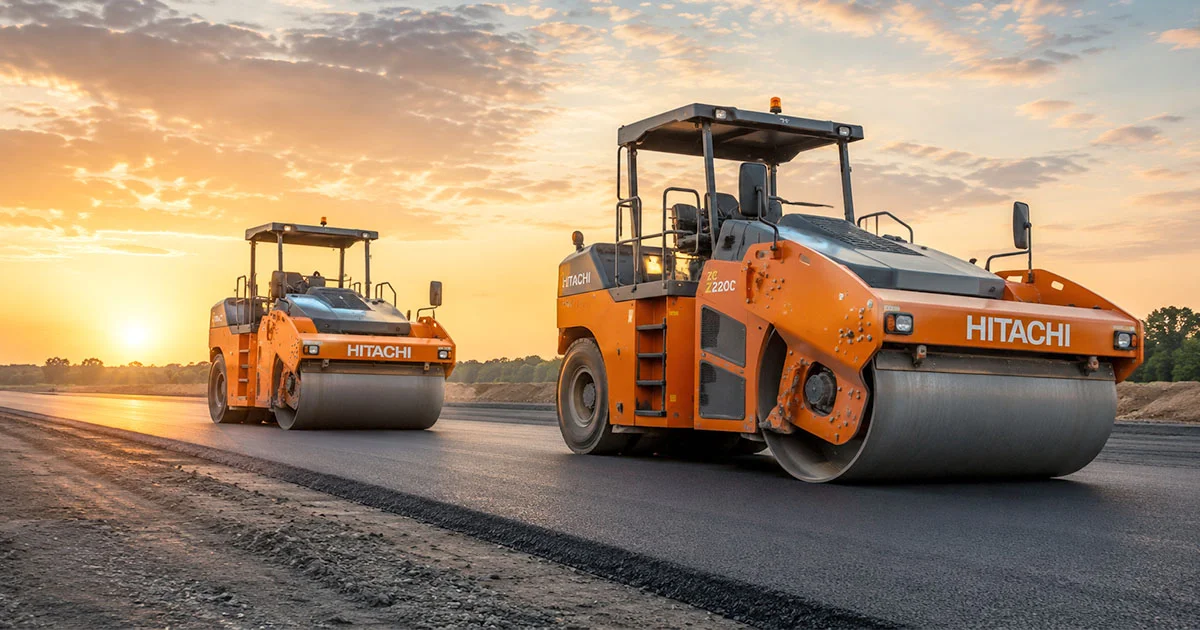
The best road roller depends on your project. Choose a single drum roller for soil and subbase work, a double drum roller for asphalt finishing, and a pneumatic tyre roller for sealing and fine surfaces. Matching the machine to the material delivers stronger compaction, lower costs, and longer-lasting results.
Choosing the right road roller can make or break a construction project. Pick the wrong machine, and you risk uneven compaction, wasted fuel, and surfaces that crack within months. Pick the right one, and you lay the groundwork for roads, foundations, and pavements that stand the test of time.
For contractors across Africa and the Caribbean, the stakes are even higher. Reliable equipment is essential when projects span remote sites and demanding climates. That's why so many builders in Nigeria, Ghana, Zambia, Guyana, and Jamaica are searching for quality construction machinery for sale that won't let them down.
This guide breaks down the main types of road rollers, explains where each one shines, and shows you how to match the machine to your site. By the end, you'll know exactly what to look for when browsing road rollers for sale.
What is a road roller and why does it matter?
A road roller is a compaction machine that uses its weight to press down and flatten soil, gravel, concrete, or asphalt. Proper compaction removes air pockets and increases density, which strengthens the surface and prevents future settling or cracking.
Without good compaction, even the best materials fail. A poorly compacted road base leads to potholes, drainage problems, and costly repairs. The right road roller protects your investment from the ground up.
What are the main types of road rollers?
Different jobs call for different machines. Here are the most common types of road rollers and what each one does best.
Single drum rollers: best for soil and subbase compaction
A single drum roller has one large steel drum at the front and rubber tyres at the rear. The drum compacts the surface while the tyres provide traction, making this machine ideal for rough terrain.
Single drum rollers excel at compacting soil, gravel, and crushed stone during the early stages of road and foundation work. Many models include vibratory drums that boost compaction power, allowing them to work deeper layers with fewer passes. Choose a single drum roller if your project involves heavy earthworks or preparing a subbase.
Double drum rollers: best for asphalt and smooth finishes
A double drum roller has two steel drums—one at the front and one at the rear. With no rubber tyres touching the surface, this design produces a smooth, even finish that's perfect for asphalt.
Double drum rollers are the go-to choice for paving roads, car parks, and pavements. They deliver consistent results on flat surfaces and are favoured for the final finishing stages of a project. Choose a double drum roller if surface smoothness matters more than off-road traction.
Pneumatic tyre rollers: best for sealing and fine surfaces
A pneumatic tyre roller uses several rubber tyres instead of steel drums. The tyres knead the surface as they roll, which is excellent for sealing asphalt and compacting fine-grained soils.
This kneading action closes surface voids and improves waterproofing, making pneumatic rollers a smart finishing tool. Choose a pneumatic tyre roller if you need a tight, sealed surface or want to compact mixed materials evenly.
How do you choose the right road roller for your site?
Selecting from the road rollers for sale on the market comes down to a few key factors. Consider each one before you buy.
- Material type: Soil and gravel call for single drum vibratory rollers. Asphalt demands double drum or pneumatic rollers for a smooth finish.
- Project size: Large highway projects need heavy, high-capacity machines. Smaller jobs like driveways or footpaths suit compact rollers.
- Terrain: Uneven or sloped sites benefit from single drum rollers with strong traction. Flat sites are well-suited to double drum models.
- Budget and running costs: Factor in fuel use, maintenance, and spare parts availability—not just the purchase price.
- Operator comfort: Long shifts demand machines with good visibility, easy controls, and a comfortable cab.
Match these factors to your project, and you'll narrow down the options quickly.
Why is quality construction machinery important in Africa and the Caribbean?
Construction is booming across Africa and the Caribbean. Roads, housing, and infrastructure projects are expanding in Nigeria, Ghana, Zambia, Guyana, and Jamaica, creating strong demand for reliable construction machinery for sale.
These regions present unique challenges. High temperatures, humidity, dust, and remote work sites all put extra strain on equipment. A roller that performs well in a temperate climate may struggle in tropical heat or on a rural site far from the nearest repair shop.
That's why sourcing durable, well-maintained machinery is so important. Quality equipment reduces downtime, lowers repair costs, and keeps projects on schedule. For contractors in these markets, dependable road rollers are not a luxury—they're a necessity.
Where can you find road rollers for sale?
Machinery Hub Japan supplies quality construction machinery for sale to buyers across Africa and the Caribbean. From single drum and double drum rollers to pneumatic tyre models, the range covers every stage of road and foundation work.
Japanese-used and reconditioned machinery is known worldwide for its reliability and careful upkeep. For contractors in Nigeria, Ghana, Zambia, Guyana, and Jamaica, this means access to road rollers for sale that are built to last and ready to perform in demanding conditions.
Build stronger roads from the ground up
The right road roller is the difference between a surface that lasts decades and one that fails within months. By matching the machine to your material, project size, and terrain, you set every job up for success.
Take time to assess your needs before you buy. Compare your options, weigh the running costs, and choose a trusted supplier. When you're ready to invest in road rollers for sale, explore the range of construction machinery from Machinery Hub Japan and equip your site with machines that deliver.
Frequently asked questions
What is the best road roller for compacting soil?
A single drum vibratory roller is the best choice for compacting soil and subbase. Its steel drum and vibration deliver deep compaction, while rear rubber tyres provide traction on rough or uneven ground.
What type of road roller is used for asphalt?
Double drum rollers and pneumatic tyre rollers are used for asphalt. Double drum rollers create a smooth, even finish, while pneumatic rollers seal the surface and improve waterproofing through their kneading action.
How much does a road roller cost?
Road roller prices vary by type, size, age, and condition. Used and reconditioned machines—such as Japanese-used rollers—often cost far less than new models while still offering strong reliability. Contact a supplier like Machinery Hub Japan for current pricing.
Are used road rollers a good investment?
Yes, used road rollers can be an excellent investment when they are well-maintained. Reconditioned Japanese machinery is valued for its durability and careful upkeep, making it a cost-effective option for contractors in Africa and the Caribbean.
Where can I buy construction machinery in Africa and the Caribbean?
Machinery Hub Japan supplies construction machinery for sale to buyers in Nigeria, Ghana, Zambia, Guyana, Jamaica, and beyond. Their range includes road rollers and other equipment suited to local conditions.