Feeding the world is no small feat. With global population figures surpassing 8 billion and agricultural demand rising year on year, the pressure on farmers to produce more with less has never been greater. At the heart of this challenge sits one of the most transformative machines in modern agriculture: the combine harvester.
From the rice paddies of West Africa to the sugarcane fields of the Caribbean, combine harvesters have become essential to keeping food moving from farm to table. This post explores how these machines underpin the global food supply chain—and why access to reliable, high-quality agricultural machinery is critical for farming communities in regions like Ghana, Nigeria, Zambia, Jamaica, and Guyana.
What Does a Combine Harvester Actually Do?
The name says it all. A combine harvester merges three separate harvesting processes—reaping, threshing, and winnowing—into a single, continuous operation. What once took dozens of labourers several weeks can now be completed by one operator in a matter of days.
This dramatic reduction in harvesting time is more than just convenient. It directly impacts food security. Crops left in the field too long are vulnerable to weather damage, pests, and spoilage. The faster and more efficiently a harvest is completed, the less food is lost—and in regions where food insecurity remains a pressing concern, that difference is measurable in lives.
The Link Between Agricultural Machinery and Food Security
Agricultural machinery plays a decisive role in shaping food supply chains. Countries with strong mechanisation rates consistently outperform their less-mechanised counterparts in yield output, post-harvest loss reduction, and overall food availability.
Sub-Saharan Africa, for example, has some of the most fertile agricultural land on the planet, yet mechanisation rates remain significantly lower than in other regions. According to the Food and Agriculture Organisation (FAO), post-harvest losses in Africa can reach as high as 40% for some cereal crops—much of which is attributable to delays and inefficiencies during harvesting. Access to the right machinery for sale, at the right price, could meaningfully shift those numbers.
The Caribbean faces a similar story. Countries like Jamaica and Guyana have long agricultural traditions, yet many smallholder and mid-scale farmers still rely on manual methods that limit their capacity and increase their loss exposure.
Why Kubota Combine Harvesters Stand Out
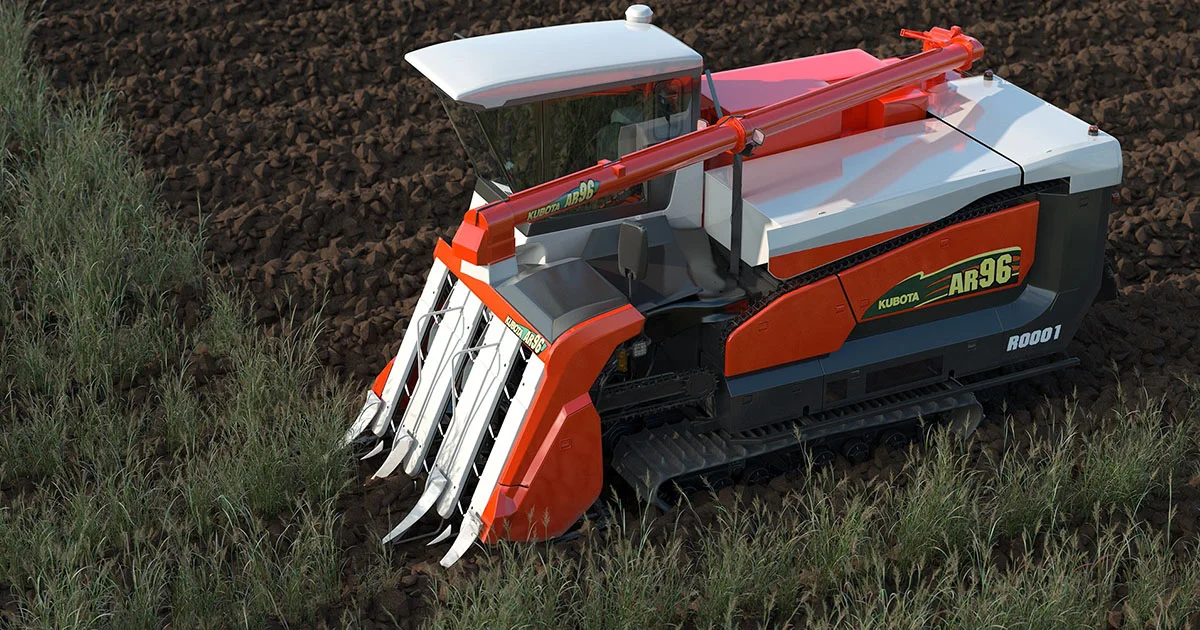
When it comes to combine harvesters suited to tropical and semi-tropical farming environments, Kubota has established itself as a trusted name worldwide. Known for their durability, fuel efficiency, and adaptability to diverse crop types, Kubota combine harvesters are particularly well-matched to the conditions found across Africa and the Caribbean.
Key advantages include:
- Compact design: Kubota models are engineered to navigate smaller field sizes and varied terrain, making them practical for farms that larger, Western-market machines simply cannot accommodate.
- Low maintenance requirements: In regions where access to specialist mechanics or spare parts can be limited, Kubota's reputation for reliability is a significant practical benefit.
- Versatility: Kubota combine harvesters handle a range of crops, from rice and wheat to maize—staple crops across Ghana, Nigeria, Zambia, Jamaica, and Guyana.
- Fuel efficiency: Operating costs matter enormously for farmers working within tight margins. Kubota's engineering prioritises efficient fuel consumption without compromising on performance.
Sourcing Agricultural Machinery: Why Japan Makes Sense
Japan has long been one of the world's leading producers of high-quality agricultural machinery. Japanese manufacturers like Kubota operate to stringent engineering standards, and the country's domestic used machinery market offers a steady stream of well-maintained equipment at competitive prices.
This is where suppliers like Machinery Hub Japan come in. By sourcing Kubota combine harvesters for sale directly from Japan and making them available to buyers across Africa and the Caribbean, Machinery Hub Japan bridges a critical gap in the global supply of agricultural machinery.
For farmers and agricultural businesses in Ghana, Nigeria, and Zambia, access to Japanese-sourced machinery offers several advantages:
- Equipment that has been regularly serviced under Japan's rigorous maintenance culture
- Transparent vehicle histories and condition reports
- Competitive pricing compared to new machinery purchased locally or through regional dealers
- Reliable export logistics to major African ports
For buyers in Jamaica and Guyana, Japanese agricultural machinery for sale represents an opportunity to modernise operations with equipment that is both proven and cost-effective.
Addressing Africa's Mechanisation Gap
The African continent holds approximately 60% of the world's uncultivated arable land. The potential is extraordinary. But unlocking that potential requires investment in the right tools.
Governments across West and Southern Africa have recognised this. Nigeria's agricultural transformation agenda, Ghana's Planting for Food and Jobs programme, and Zambia's continued investment in smallholder support all point to a growing policy commitment to improving farm productivity. Mechanisation is central to each of these efforts.
When farmers in these regions gain access to Kubota combine harvesters for sale through trusted international suppliers, the downstream effects ripple across entire communities—more grain reaches the market, income rises, and local food security strengthens.
The Caribbean's Agricultural Opportunity
Jamaica and Guyana each face their own agricultural challenges, but both share a common need: machinery that works hard in hot, humid conditions without constant costly repairs.
Guyana, in particular, has emerged as one of the Caribbean's most significant rice-producing nations, with its agricultural sector playing a central role in the national economy. Efficient harvesting machinery is not optional here—it is foundational to the sector's competitiveness.
In Jamaica, the push to reduce food import dependency and grow domestic agricultural output has created demand for machinery that empowers local farmers to scale up. Kubota's compact combine harvesters are well-suited to Jamaican farm sizes and terrain, offering a practical route to greater productivity.
What to Look For When Buying a Combine Harvester
If you are considering purchasing agricultural machinery for your farming operation, here are a few factors worth evaluating:
- Crop compatibility: Confirm the model is suited to your primary crops. Kubota offers specialised rice harvesters as well as multi-crop models.
- Field size and terrain: Compact models are better suited to smaller or irregular plots; larger models deliver greater throughput on expansive, flat fields.
- After-sales support: Access to spare parts and technical support matters as much as the machine itself. Choose a supplier with a clear after-sales commitment.
- Machine condition and history: When sourcing used machinery, request full service records and condition reports before purchasing.
- Shipping and import logistics: Factor in freight costs, port clearance, and any applicable import duties when comparing prices.
Securing Tomorrow's Harvests
The global food supply chain is only as strong as the tools that sustain it. Combine harvesters sit at a critical juncture in that chain—harvesting faster, reducing waste, and enabling farmers to scale in ways that manual methods simply cannot support.
For farming communities across Africa and the Caribbean, access to reliable agricultural machinery for sale is not a luxury. It is a practical necessity. Suppliers like Machinery Hub Japan are making that access more achievable by connecting buyers in Ghana, Nigeria, Zambia, Jamaica, and Guyana with quality Kubota combine harvesters sourced directly from Japan.
If you are looking to invest in machinery that will strengthen your operation and contribute to long-term food security in your region, explore the range of Kubota combine harvesters for sale through Machinery Hub Japan today.